

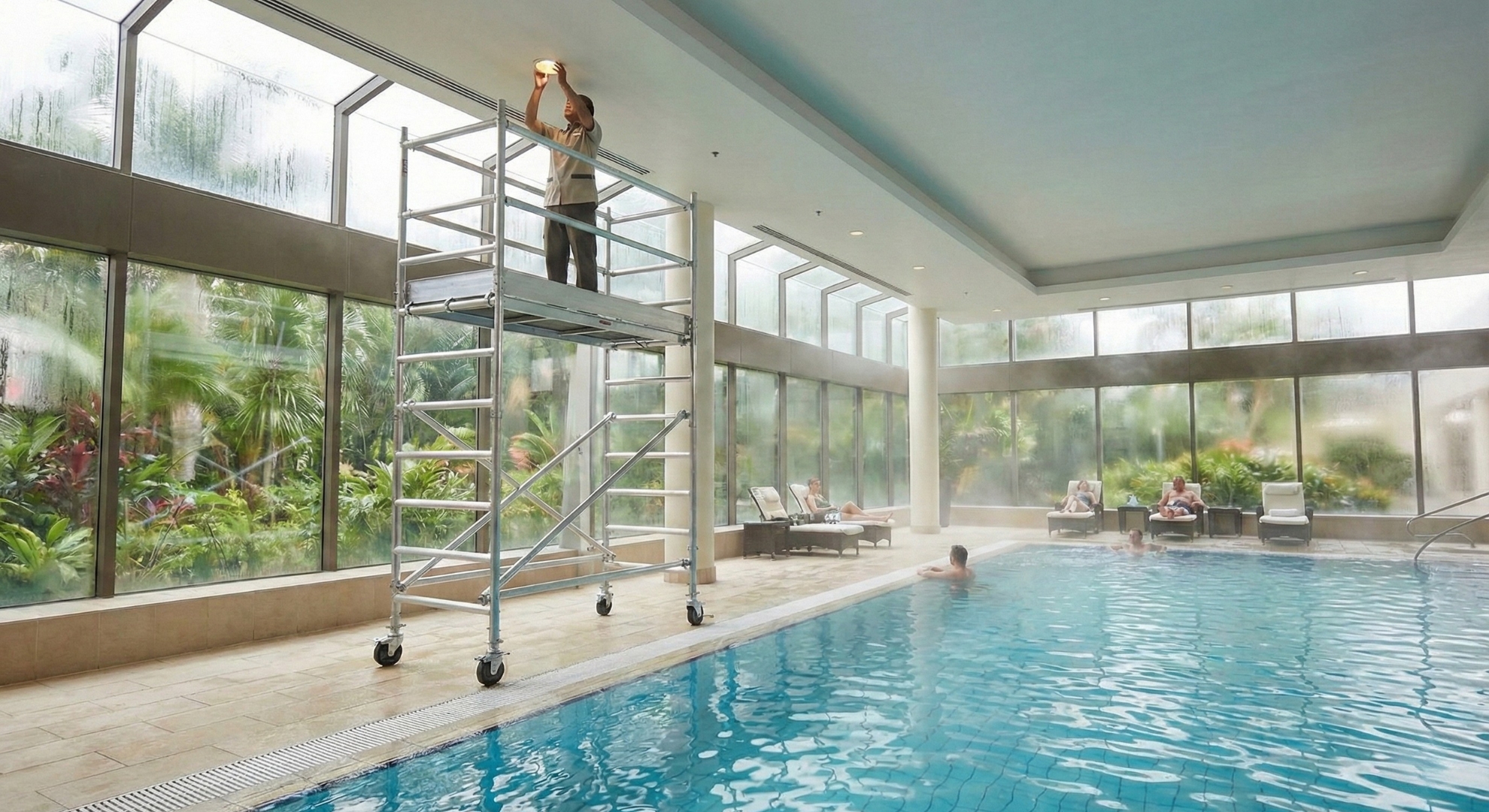
India's luxury hospitality sector, from the coastal resorts of Goa to the mountain retreats of Himachal, increasingly features indoor temperature-controlled pools, Jacuzzis and full spa facilities. For the teams who maintain them, these are extreme environments: near-constant humidity, warm air and pool chemicals such as chlorine combine into a "rust trap" for ordinary steel access equipment.
Overhead jobs in a pool hall are routine: replacing lights, servicing ventilation ducts, repairing ceiling panels, repainting walls and cleaning skylights. Every one of them needs safe access at height, often directly over water or a wet tiled floor. The hall is closed, warm and damp, so moisture condenses on every surface and chlorine-laden air speeds up corrosion of anything that is not built to resist it.
When steel scaffolding is used over or near a pool, oxidised water can drip from the frame and permanently stain expensive tiles or stone, and rust particles can reach the water and filtration system. Many hotels end up closing the whole pool area and draining thousands of litres of water just to complete a minor overhead repair. The scaffold is the cheap part of that job; the shutdown is the expensive one.
Aluminium forms its own thin protective oxide layer, so it does not rust the way steel does. Our towers are made from 6063-T6 aluminium alloy at our Panipat plant, and the frames are TIG-welded. That makes them a practical choice for humid halls: a tower can be erected at the poolside with no rust run-off to stain the tiles or contaminate the water. Because the towers are light, a small crew can assemble, move and dismantle them without a crane.
That allows "live maintenance": fixing lights or ducts while the rest of the facility stays open, instead of losing days of revenue and guest goodwill to a shutdown. Aluminium is corrosion-resistant, not indifferent to every chemical, so rinse towers after work in a chlorinated hall and store them dry.
Typical work includes light and fixture replacement, HVAC and dehumidifier duct servicing, ceiling and soffit repair, wall repainting and re-tiling, glazing and skylight cleaning, and annual inspections. Most of these are short jobs, so many hotels hire rather than buy; our rental checklist explains what to confirm before you book.
Yes. Aluminium does not rust, so it will not leave rust stains or run-off in the water or on the tiles. Plan the tower position, lock the castors and keep the platform guarded.
Aluminium resists the humid, chlorinated air of a pool hall far better than steel, but it is not immune to every chemical. Rinse after use in a chlorinated area, keep the towers dry in storage and inspect them regularly.
Not usually. Because the tower leaves no rust run-off, work can often continue with the pool operating, subject to your site's safety rules and good housekeeping around the water.
Tell us the hall height, the work area and how long the job will take, and we will recommend a tower and quote for rent or purchase. Browse our full aluminium scaffolding range or request a quote.
Related reading: why Indian malls and airports are switching to aluminium mobile towers.
© All Rights Reserved by Indoor Innovations LLP


