

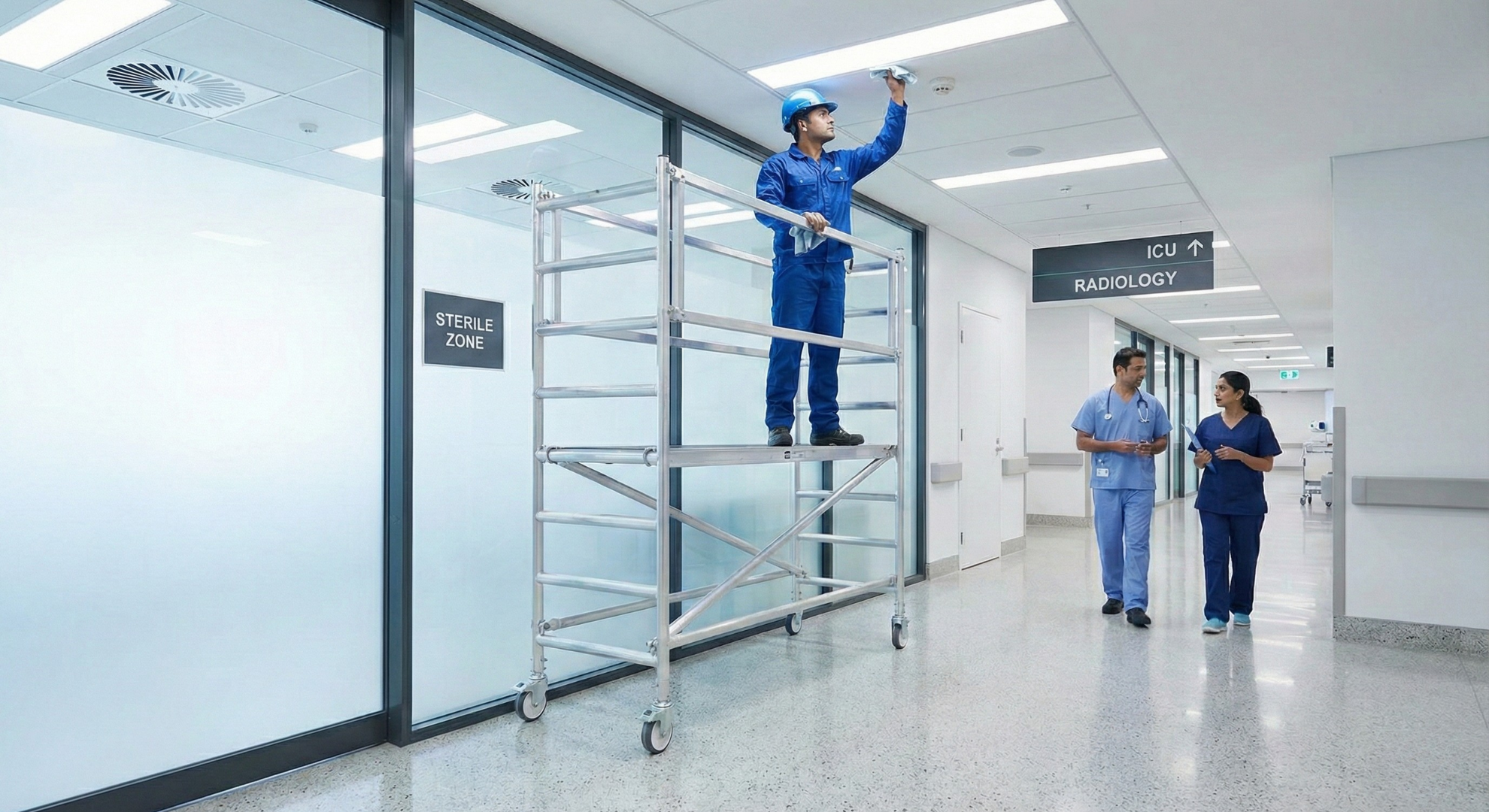
India is currently witnessing a massive surge in healthcare infrastructure, from "Smart Hospitals" in metropolitan hubs like Delhi and Mumbai to specialised diagnostic clusters in Tier-2 cities. In these environments, maintenance is not just about fixing a ceiling tile; it is about protecting patient health and sensitive medical technology.
Traditional steel scaffolding is fundamentally incompatible with the modern hospital. The primary issue is particulate contamination. Steel pipes are prone to internal and external oxidation; as they are moved or assembled, they shed microscopic rust particles and dust that can compromise the sterile air of an ICU or a surgical theatre. Furthermore, the loud "clanging" of steel pipes and heavy clamps creates a high-decibel environment that is detrimental to patient recovery and focus in high-stress medical zones.
Indoor Innovations provides the solution with Medical-Grade Aluminium Towers. These systems are designed for "Silent Assembly." Using precision-engineered snap-locks instead of heavy hammering, the towers can be erected near recovery wards with minimal noise disruption. Because aluminium is naturally non-corrosive, it is "Clean Room Compatible," ensuring zero rust shedding.
Moreover, for areas housing MRI or CT scan machines, the non-magnetic and non-sparking properties of aluminium are life-saving features. Using a steel scaffold near a powerful MRI magnet is an extreme safety hazard. By switching to aluminium, Indian healthcare facility managers ensure that they meet the highest global standards for safety and hygiene while maintaining 24/7 operational uptime.
© All Rights Reserved by Indoor Innovations


