

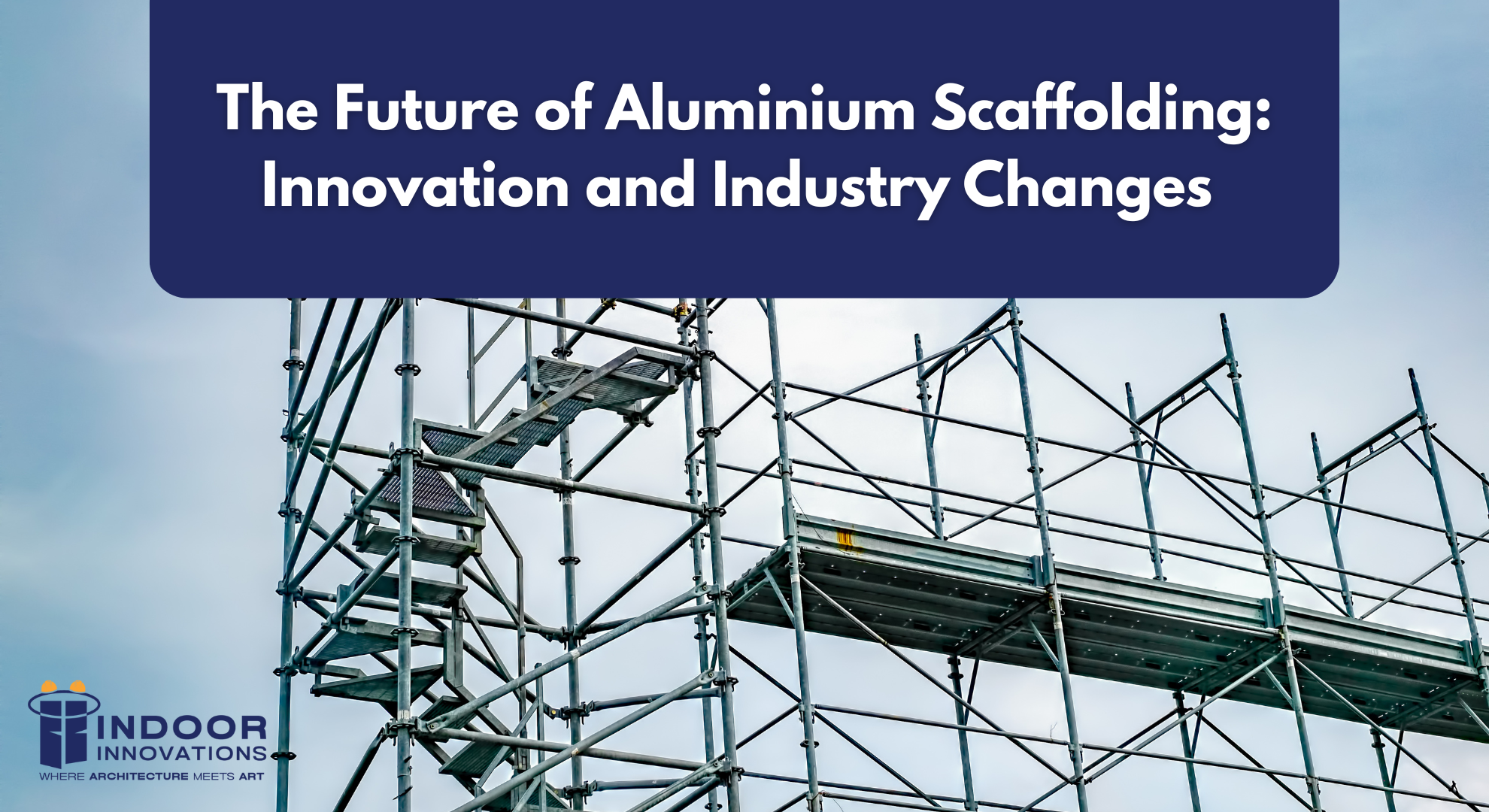
2026 is set to be a transformative milestone for the scaffolding industry in India. As infrastructure and real estate projects reach new heights and complexity, top construction companies are prioritising solutions that are smarter, greener, and safer—with aluminium scaffolding at the forefront of this evolution. Indoor Innovations continue to shape the future by delivering what tomorrow’s market demands. See our current aluminium scaffolding systems already built for this shift.
Modern architecture and urban density require scaffolding that can adapt instantly to unique site conditions. Modular aluminium systems now feature rapid-connect components, lightweight parts, and scalable platforms, enabling:
Indoor Innovations keeps ahead by investing in modular product R&D, ready to fit any client’s workspace—no matter how challenging.
Digital transformation isn’t just for offices: in 2026, smart scaffolding means integrating IoT sensors and cloud-based monitoring into every platform.
Indoor Innovations is leading the adoption of these technologies, giving customers confidence and control at every stage of their build.
Environmental, Social, and Governance (ESG) criteria are now critical for every developer, contractor, and supplier. In 2026:
Choosing Indoor Innovations helps stakeholders deliver on client mandates for green building standards and government incentives.
India’s construction sector is set for explosive growth—urbanisation, megaprojects, housing, and transport are all driving scaffolding demand.
With unmatched expertise and rapid fulfillment, Indoor Innovations is the scaffolding partner of choice for India’s fastest-growing sectors.
The bar for safety is rising. New ISO, BIS (Indian Standards), and global codes will dominate contracts and audits in 2026:
Indoor Innovations pledges ongoing support—offering not just the safest products, but also professional training and up-to-date compliance resources.
As technology, sustainability, and quality become non-negotiable, Indoor Innovations continues to pioneer green, smart, and modular scaffolding for every project:
2026 will redefine what’s possible on and above every jobsite. With Indoor Innovations, embrace the future of aluminium scaffolding—built for smart, eco-driven, and high-performance construction.
As Indian manufacturing modernises, factories are replacing improvised pipe-and-clamp scaffolding with modular aluminium systems built around error-proofing. Interlocking snap-locks and colour-coded components are designed so parts fit together only one way—the safe way—sharply reducing the human error that causes most scaffolding failures. High-grade aluminium alloys handle heavy industrial loads while staying light enough to be repositioned by hand, which is critical during plant shutdowns and turnarounds when maintenance teams move quickly between machines. Because every certified component has a known, tested load capacity, safety officers can complete Hazard Identification and Risk Assessments (HIRA) with confidence rather than guessing at the strength of a rusted steel pipe or worn plank.
India's tightening city plots demand access solutions that fit into narrow alleys and congested sites, reach ever-higher skylines with rapid per-floor reconfiguration, and switch quickly between demolition, structure, and fit-out phases. Modular aluminium towers, adjustable platforms, and angled bases handle these constraints—enabling overnight installations at metro stations, airports, and malls that avoid crowd disruption, low-impact access for heritage and commercial renovations, and fast facade or atrium maintenance across busy urban facilities. Related reading: how aluminium scaffolding supports sustainable construction.
© All Rights Reserved by Indoor Innovations LLP


