

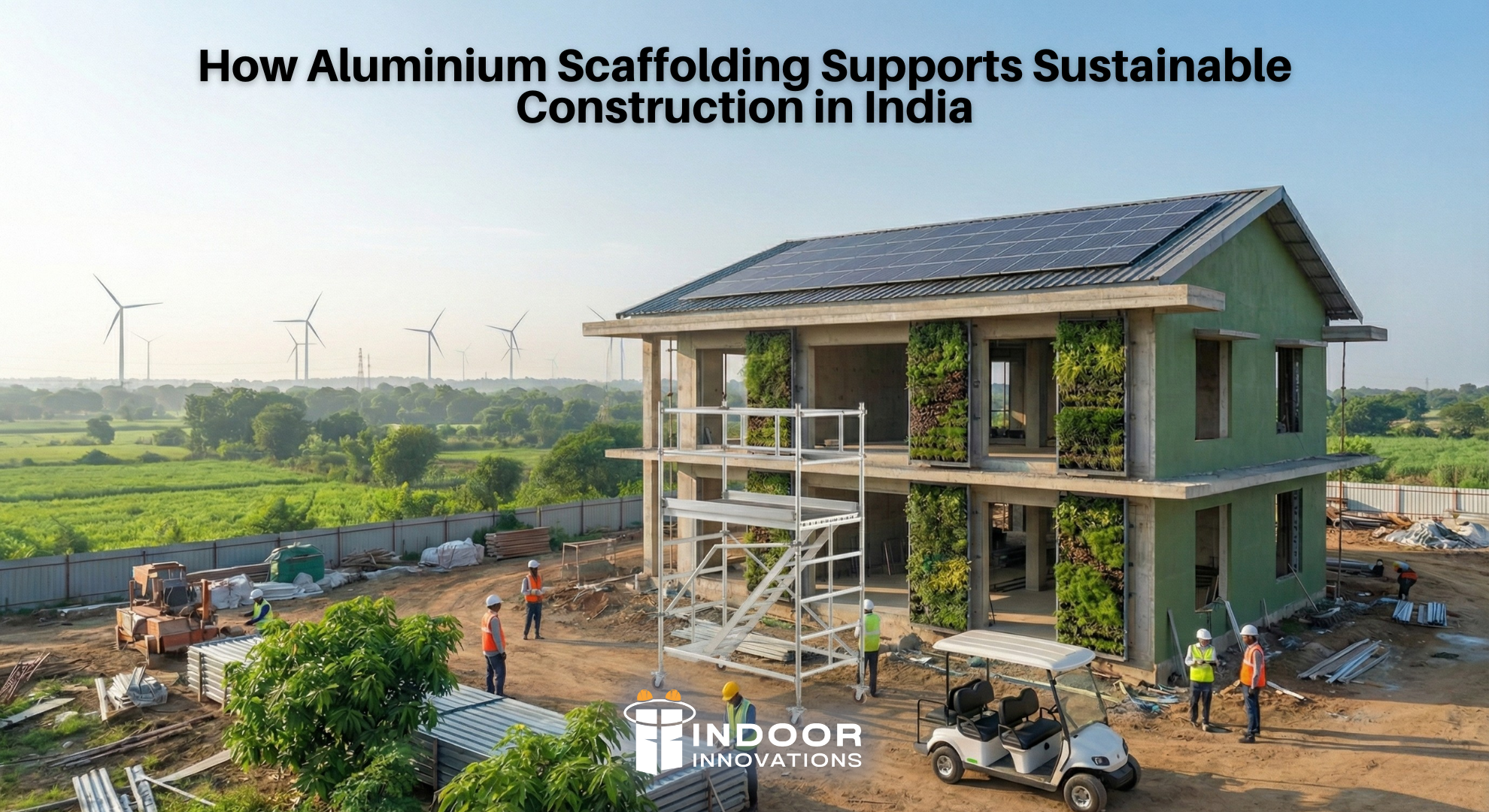
As India moves toward a greener future, the construction industry is under growing pressure to reduce its carbon footprint. With the rise of LEED and IGBC-rated green buildings, the equipment used on site is increasingly scrutinised for its environmental impact. Aluminium scaffolding from Indoor Innovations offers a more sustainable alternative to the high-waste lifecycle of traditional materials.
The primary environmental advantage of aluminium is recyclability. Unlike timber, which eventually rots and ends up in landfill, or steel, which needs a great deal of energy to re-smelt and loses quality after repeated rust cycles, aluminium can be recycled again and again without losing its properties. Industry bodies commonly cite that around three-quarters of all aluminium ever produced is still in use today.
When an Indoor Innovations tower eventually reaches the end of its long life, which can be decades, it does not become waste; it becomes a valuable raw material. This circular-economy approach is a cornerstone of sustainable construction in modern India.
Beyond recycling, the carbon footprint of daily operations is lower with aluminium. Because the material is light, the fuel needed to move scaffolding from a warehouse or plant to a construction site falls. A single truck can carry more aluminium components than steel ones, which means fewer trips and lower CO2 emissions. On site, there is no need for heavy machinery to move or hoist aluminium frames, which cuts energy use further. For a project aiming for green certification, these small savings in the "equipment and materials" category can add up.
Durability also plays a role in sustainability. In India's monsoon and coastal humidity, steel equipment needs repeated repainting and chemical treatment to hold off rust, and those paints and solvents often contain volatile organic compounds (VOCs) that harm the environment. Aluminium's natural corrosion resistance removes that cycle: it stays clean and structurally sound without chemical intervention, and a tower that lasts longer means fewer replacements and less material consumed over time.
Modular aluminium towers are built to be dismantled, moved and reassembled, so the same set can serve project after project. Hiring a tower for a short job instead of buying a new one avoids tying up material that sits unused, and our rental checklist explains how to hire well.
Whether any of this earns credits on a particular project depends on the rating system and your green-building consultant, so confirm the documentation they need early.
Aluminium is lighter to transport, does not need repainting to resist rust and can be recycled repeatedly, which are the main reasons it is regarded as the more sustainable choice for access equipment.
It can support your sustainability documentation through recyclable materials, lower transport emissions and reduced site chemicals. Credits depend on the rating system, so check the requirements with your consultant.
Aluminium has strong scrap value and is recycled into new metal, so a worn-out tower returns to the supply chain instead of landfill.
By choosing aluminium scaffolding from Indoor Innovations, developers make a long-term commitment to the environment without compromising on safety. Explore our aluminium scaffolding range or request a quote.
Related reading: the future of aluminium scaffolding in 2026.
© All Rights Reserved by Indoor Innovations LLP


