

What it is, why it is replacing steel, where it is used, and how to choose between renting and buying — explained for Indian sites.

Aluminium scaffolding is a lightweight, modular access system designed for safe work at height across industrial, commercial, and residential environments. Unlike traditional steel scaffolding, aluminium systems are engineered for mobility, fast assembly, and corrosion resistance.
These systems are commonly referred to as Mobile Aluminium Towers, and they are increasingly becoming the standard for safe, efficient access in India’s fast-growing infrastructure landscape.
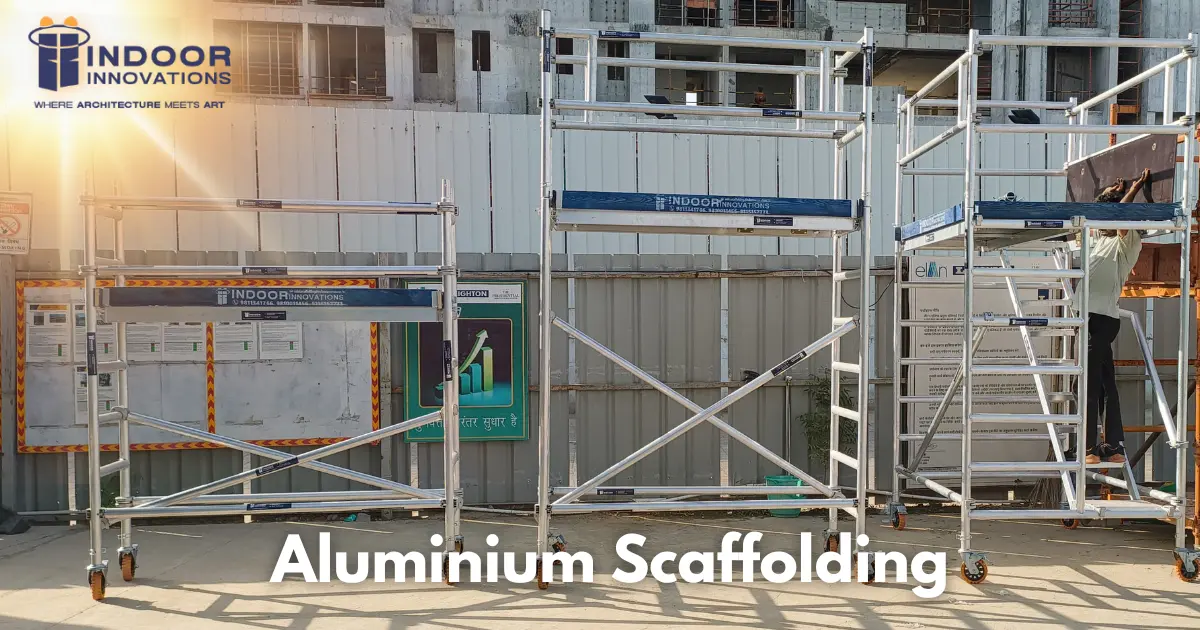
Aluminium is nearly 3x lighter than steel. This allows teams to assemble towers quickly without heavy manual handling equipment. In high-traffic environments such as warehouses and hospitals, this speed directly reduces downtime.
India’s climate, especially in coastal and humid regions, accelerates rust in steel scaffolding. Aluminium naturally forms a protective oxide layer, making it highly resistant to corrosion.
Steel requires regular repainting and anti-rust treatment. Aluminium requires minimal upkeep, lowering long-term operational cost.
Aluminium scaffolding is clean, non-shedding, and suitable for indoor environments, including:
High-reach racking systems demand mobile towers that can move quickly across aisles without disrupting logistics flow.
Non-magnetic, low-noise aluminium towers are ideal for sensitive zones such as ICUs and MRI rooms.
Lightweight towers with non-marking wheels protect marble and vitrified flooring.
RWAs prefer aluminium towers for safe in-house maintenance without hiring unsafe external scaffolding.
Aluminium resists chlorine exposure and moisture, preventing rust stains and contamination.
Tell us your site conditions and we’ll recommend the right tower configuration.
Ask our team →Many businesses initially search for aluminium scaffolding for rent. However, rental costs accumulate quickly for projects requiring frequent maintenance access.
Owning aluminium scaffolding eliminates recurring rental expenses and ensures immediate availability when needed.

Standard vertical access systems with locking castors for mobility.

Designed for confined spaces and corridor access.
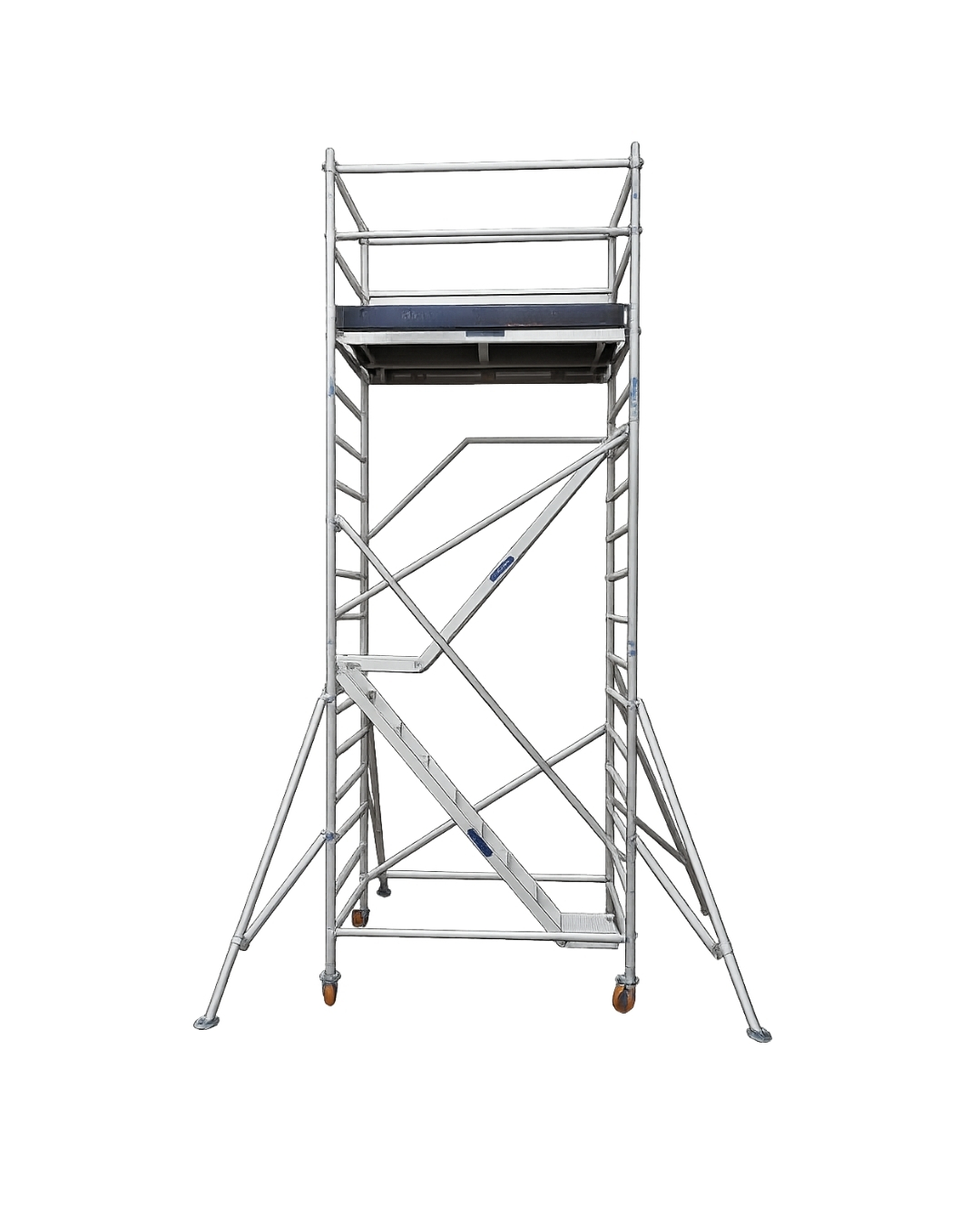
Engineered for uneven stairwell access and split-level environments.

Used for wide-span access above obstacles.

Specialized for extended reach applications in industrial zones.
Specifications, working heights and platform sizes for every Indoor Innovations tower.
View all scaffolding →Choosing the right configuration depends on height requirements, surface conditions, and workspace limitations.
Standard specifications across the Indoor Innovations mobile scaffolding tower range. Exact figures vary by model — each product page lists its full model table.
| Specification | Detail |
|---|---|
| Material | 6063-T6 aluminium alloy |
| Platform dimensions | 1.35 m wide × 1.80 m long (Stairway, Zig-Zag and Extra Approachable towers); 0.75 m wide × 1.80 m long (Narrow towers) |
| Max working height | Up to 36.4 m (Extra Approachable towers); 3.2 m to 18.4 m across the Narrow, Zig-Zag and Stairway ranges |
| Safe working load | 200 kg/m² — from 270 kg to 810 kg per platform, depending on the model |
| Free-standing height | Up to 12.4 m indoors and 8.4 m outdoors |
| Certifications | Built to EN 1004 and IS 2750; manufactured under an ISO 9001:2015 certified quality system |
| Assembly & supply | Tool-free assembly; available on rent or purchase, delivered across India |
A reliable supplier should provide technical guidance, configuration recommendations, and safety documentation.
Yes, when assembled correctly and used within its rated capacity, aluminium scaffolding is extremely safe.
Safety largely depends on certified components and correct assembly procedures.
Instead of focusing solely on upfront cost, businesses should evaluate lifecycle savings, durability, and operational efficiency.
From industrial plants to luxury residential societies, aluminium scaffolding is becoming the preferred access solution because it offers:
As India’s infrastructure modernises, lightweight modular access systems are replacing outdated steel structures.
Aluminium scaffolding is a lightweight, modular access system built for safe work at height. Compared to steel, it's nearly 3x lighter, faster to assemble, and naturally corrosion-resistant, making it better suited to India's humid and coastal conditions.
Renting is usually better for short-duration projects, one-time repair work, or emergency access needs. Buying makes more sense when maintenance is ongoing, a facility operates year-round, safety compliance is critical, or downtime is costly, since owning eliminates recurring rental expenses.
Yes. Aluminium towers are non-magnetic and low-noise, making them suitable for sensitive zones like ICUs and MRI rooms. At the same time, their non-marking wheels protect marble and vitrified flooring in malls and airports.
Pricing depends on platform height, tower width, configuration type, add-on accessories, and load capacity. Rather than focusing only on upfront cost, it's worth evaluating lifecycle savings, durability, and operational efficiency.
Common types include mobile aluminium towers, narrow towers for confined spaces, staircase scaffolding towers for uneven stairwells, bridge-type scaffolding for wide-span access, and extra-approachable towers for extended industrial reach.
Share your working height and site conditions — our team will recommend the right configuration and send you a quote.
© All Rights Reserved by Indoor Innovations LLP


